
- News
- City News
- mumbai News
- Won't suppress MLAs' dissent but exemplary action if conduct unruly: Maharashtra assembly speaker Rahul Suresh Narwekar
Trending
This story is from July 27, 2022
Won't suppress MLAs' dissent but exemplary action if conduct unruly: Maharashtra assembly speaker Rahul Suresh Narwekar
Colaba boy Rahul Suresh Narwekar is thrilled with his latest assignment: Speakership of Maharashtra assembly, a coveted office held in the past by stalwarts such as V S Page, Sheshrao Wankhede, Shivraj Patil and Dilip Walse-Patil.
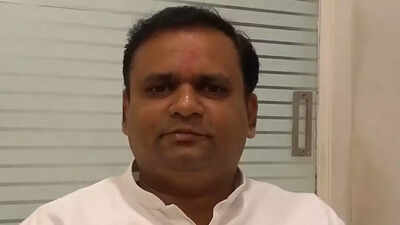
Maharashtra assembly speaker Rahul Suresh Narwekar

Q: How does it feel to occupy one of the top-heavy offices in the state?
A: I'll be taking a wide-angle view of Vidhan Sabha. This would help me understand the state's urgent problems.
Q: When will the monsoon session begin?
A: I am awaiting the Governor's summons in this regard. I think it should happen soon.
Q: Did the business advisory committee (BAC) meet?
A: No.
Q: The assembly's monsoon session could be a stormy one following huge political turmoil.
A: I don't think so. The business will be smooth. The new regime is fairly stable and the CM will soon expand the state cabinet.
Q: SC is currently busy with constitutional issues in the wake of formation of the Eknath Shinde government. Do you see this as a face-off between judiciary and legislature? A constitutional impasse?
A: There is no such impasse. Courts have in the past desisted from getting into issues which fall in the domain of the legislature. It is the Speaker who has to decide, and I haven't as yet pronounced my ruling on the matter. But there is no constitutional deadlock. We have a mature judiciary and a responsible legislature -- and the Constitution is there to safeguard fundamental rights. Second, Maharashtra has a vibrant democratic tradition. My first day as speaker was fruitful. The house did business for nine hours. There is ample scope for productive work in the session.
Q: Saamna's executive editor alleged the speaker has violated the Constitution.
A: Speaker derives his powers from the Constitution. And its interpretation is subjective, but that does not mean a stand taken is unconstitutional. Responsible parties must bear this in mind and lead by example rather than ridicule a constitutional office unwarrantedly.
Q: Cases of uproar are on the rise. Legislators rush to the 'well', and many legislators were suspended last year.
A: A law-maker's chief task is to make laws and pass bills. People want legislators to be their true representatives and do productive work. Any attempt to demean the office of the Speaker, who derives strength from the Constitution, would mean ridiculing the Constitution. Such attempts will be dealt with firmly and in an exemplary manner. But no injustice will be done and no voice suppressed provided members adhere to rules. Members can't raise points of order and points of procedure at their will. They will have to cite relevant rules. After all, I am a lawyer (laughs).
Q: How do you plan to streamline functioning of the assembly?
A: I am working on a two-pronged strategy. My short-term plans are: No bill to be okayed without a proper debate, and a paper-free Vidhan Sabha. I also want the state legislature to go online. Most of us worked from home during the pandemic. I'm keen on replicating this example in legislature. MLAs too should go virtual. I want our MLAs to go abroad, visit Parliaments and understand their rules, interact with foreign experts on, say, public health, education and irrigation. We are working on a plan to send MLAs to Israel which boasts a world-class irrigation technology. I recently held discussions with the consul general of Israel and deputy consul general of Britain in this connection. Also, I will be shortly going to Canada for a conference of presiding officers. Such interactions will strengthen our democracy.
Q: Your take on first-time MLAs.
A: We are witnessing a new era of young politicians. New faces symbolise hope. The average age of the present assembly is 43. I am going to allocate proportionate time to debutant legislators during debates. I think young legislators are better equipped to absorb new ideas. But they must observe rules.
Q: It is often seen that in debates, legislators keep raising questions exclusive to their constituencies and larger issues concerning the state are ignored.
A: This happens because every MLA is worried about the next election. We need to make a difference between electoral politics and legislative politics. Members can avail of legislative devices such as question hour to focus on their constituencies. But they need to look at the larger picture.
Q: What made you accept the Speaker's post at an early age? You are 44.
A: I take a different view. Gone are the days when veterans were made to sit in the Speaker's chair. Young politicians can profit from holding key posts. I think speakership will enhance my political and legislative understanding and stand me in good stead.
End of Article
FOLLOW US ON SOCIAL MEDIA









Hot Picks
TOP TRENDING
Trending Stories
In City
Entire Website
- The Secret Behind NFL Marriages: How These Couples Make It Work
- UPI transaction limit to change from September 16! Here are the new limits for various UPI payments
- When Laura Loomer said she's single because she's too focused on Donald Trump
- South Delhi shooting: Sleuths see killing as a message to big businessmen
- Top 10 sports stars turned power couples: From Agassi-Graf to Conner-Comaneci
- 3 Zodiac Signs Most Likely to Become Multimillionaires
- Narayana Murthy faces backlash for parenting remarks on social media; users say, "after working 72 hours a week, there’s barely time left to have babies…”
- 'Would not fit in ... ': Princess Diana's brother warned Prince Harry about marrying Meghan Markle
- The 3 Strongest Zodiac Signs: Powerhouses of the Zodiac Wheel
- Dark Side Of Each Zodiac Sign
- Assassination bid on Trump: 'Gunman supporter of Ukraine in its war against Russia'
- Who is Ryan Routh? Man held for 'apparent assassination attempt' on Trump
- Cow vigilantes killing a Brahmin is the wake-up call India needed
- Arvind Kejriwal's resignation: Who will be the next Delhi CM?
- 'Bolte zyada hain': Pakistan great on Babar, Virat
- 'No one trying to ...': How Musk reacted to 2nd assassination bid on Trump
- Will resignation gambit help Kejriwal win Delhi again?
- Apple's biggest 'iPhone update' for 2024: India time, how to prepare
- This Indian batsman is giving Australia sleepless nights
- Process for census initiated, 'open' on caste count: Govt

Popular Categories
Hot on the Web
Top Trends
Trending Topics
Living and entertainment
Latest News
Challenges won’t stop me from making films that matter: Aditya Kripalani3 Reasons Why Hell in a Cell Tag Team Match Between Cody Rhodes, Roman Reigns and The Bloodline 2.0 Would Be perfect for Bad Blood 2024Odisha to join Ayushman plan; Delhi, Bengal to be only holdoutsRobert's wild encounter with Henry, the world's oldest 124-year old crocodile; internet shocked | Watch videoHooda says Congress coming to power in Haryana, asks criminals to give up crime or leave state‘I Hate Taylor Swift!’: Donald Trump rages after singer endorses Kamala HarrisFather-son duo Eugene and Dan Levy's dazzling entrance at the EmmysBakuchiol: Nature’s answer to youthful skin radianceSaudi Arabia footballer Fahad Al-Muwallad hospitalized after fall from balcony'Will hug my kids extra tight tonight': JD Vance after Trump 'assassination attempt'Bengal govt blames junior docs for logjam but sends fresh offer for talksLodi-era mosque collapses in AgraVineet Kumar Singh calls Superboys of Malegaon standing ovation at TIFF a 'magical experience': 'I can still hear the clapping and whistling" - ExclusiveFoods to pair with dates for boosting immunityLast Lunar Eclipse of 2024: What it means for your zodiac signNeeraj Chopra misses second Diamond League title by an agonising 1 cm; finishes second behind AndersonKejriwal says he will quit as CM in 2 days, wants aam aadmi's 'honesty certificate'Jessica Gunning wins her 1st Primetime Emmy for 'Baby Reindeer'
Copyright © 2024 Bennett, Coleman & Co. Ltd. All rights reserved. For reprint rights: Times Syndication Service